
River's end
What we took with us from the Nahanni

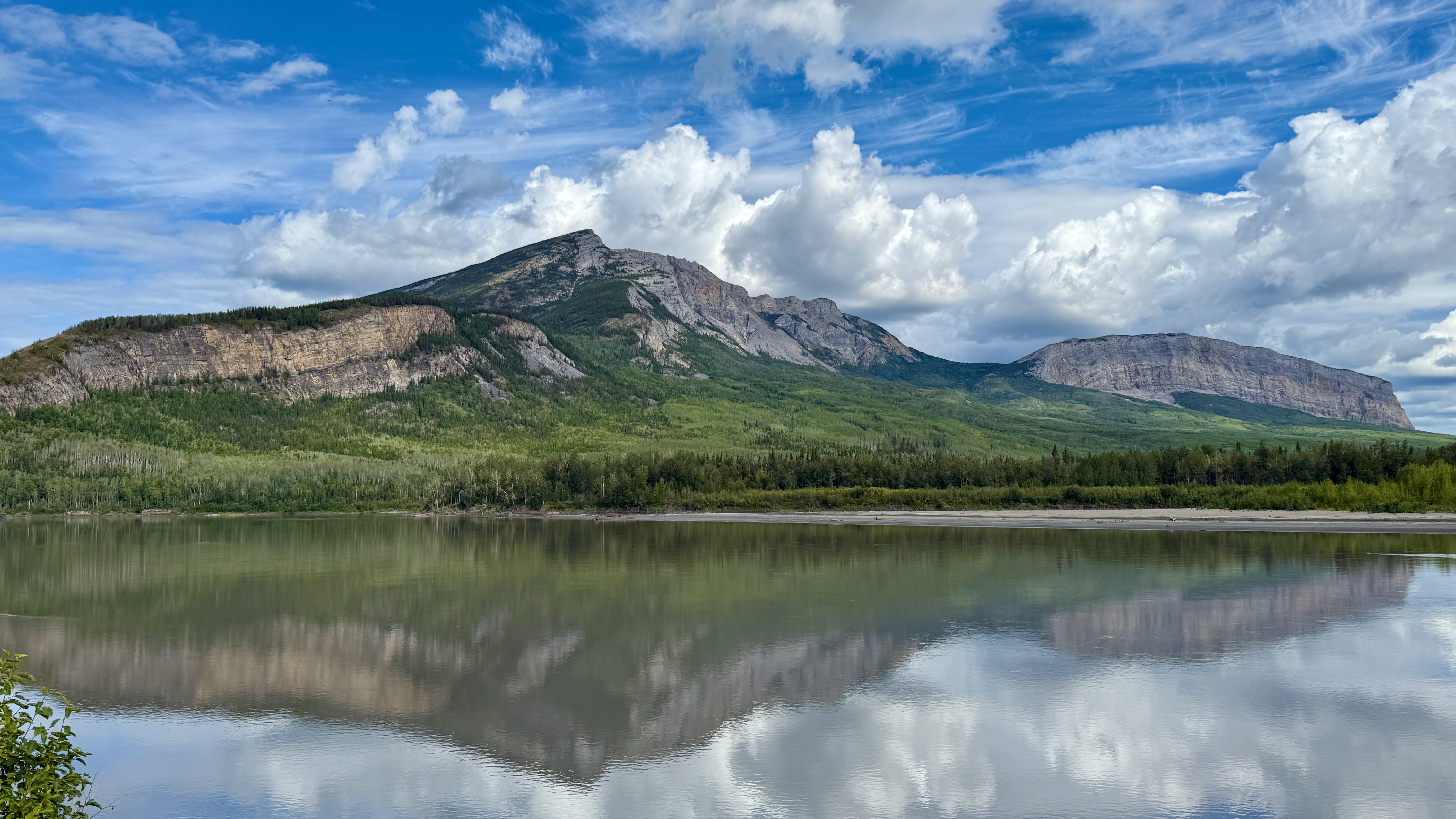
This is Part 3 of my Nahanni River series. Part 1 can be found here. Part 2 can be found here.
On a long wilderness trip, the rules of city life break down. You stop worrying about your dirty fingernails, unshaved legs, and smelly shirts. Your oily hair slides into braids that come undone through a long day. You wash your underwear in the river and hang it on a clothesline for all to see.
Yet when we left the canyons, though, we knew we had to prepare for civilization. After running the Nahanni’s final rapid at Lafferty’s Riffle, First Canyon tapered down to nothing, and our canoes shot into the foothills. Only a few lonesome peaks poked out of the plain. We followed our noses to the river’s right shore, where sulphurous steam announced our first warm bath of the trip.
Kraus Hotsprings trickle out of the riverbank and into a hand-dug pool just large enough for our group of eight. The area around the spring is the former homestead of Gus and Mary Kraus, who lived here for decades. Grassy fields extend from their cabin to the shore, while lush vegetation and rich berry bushes crowd the forest all around. In the summer sun, I could see why early explorers called the Nahanni a “tropical” valley in the far north.
As I donned my bathing suit and slipped into the warm water, my tight muscles released. The water cradled my tired shoulders as I leaned against the rocks and looked back upriver towards the canyon’s mouth.
While the hot springs were luxurious, rinsing off was anything but. Getting the sulphur smell out meant a dip in the icy Nahanni. A plunge in the river made me gasp. While my feet went numb in seconds, the blazing sun burned my exposed neck.
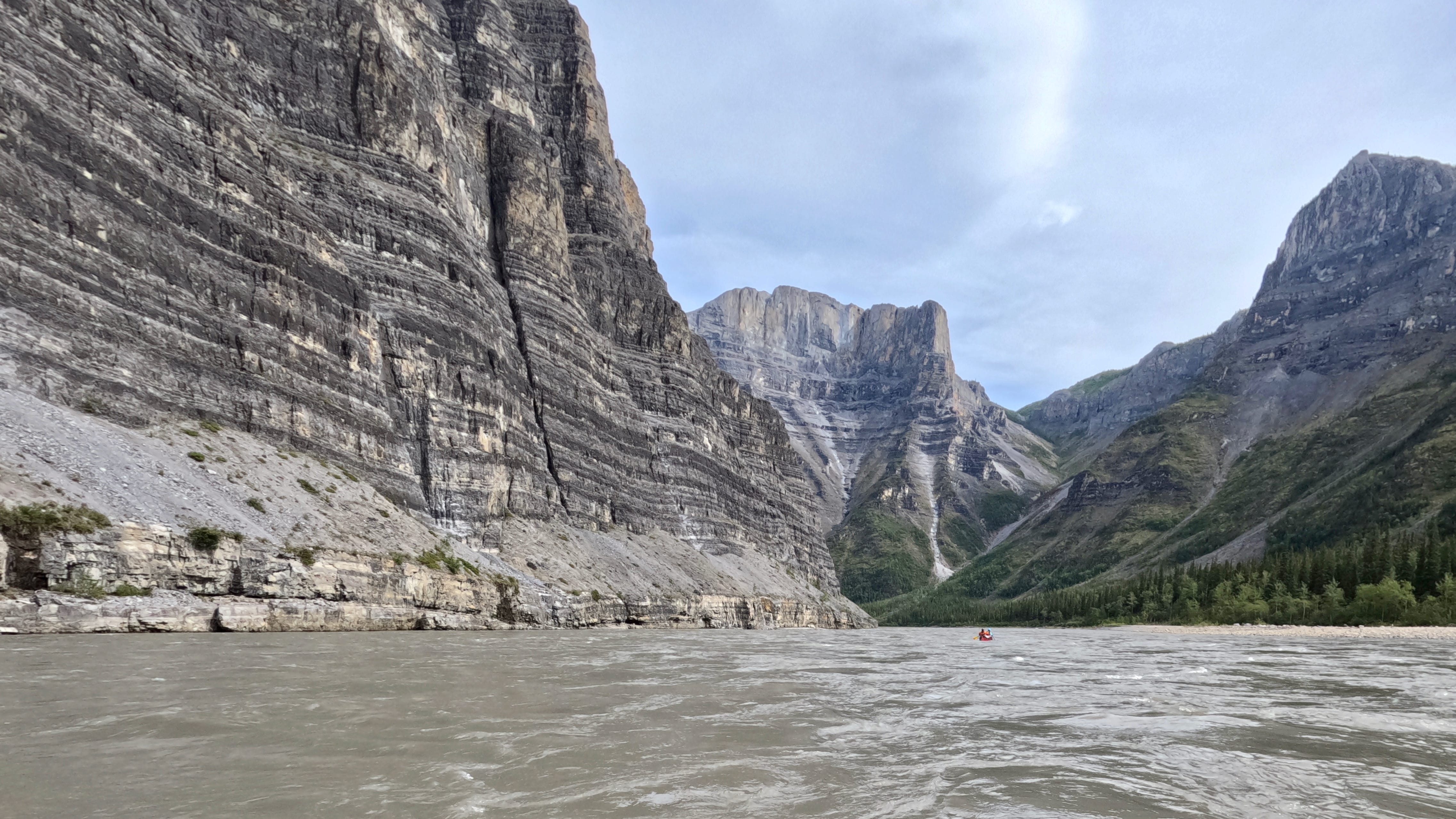
Below First Canyon, the Nahanni sprawls across her floodplain. More than a kilometre wide in some places, the Splits are a maze of wandering channels and a dumping ground for Nahanni’s detritus as she marches south. Driftwood piles up in great sucking strainers. Gravel islands grow and vanish with every flood. Submerged mud bars suddenly rise to scrape canoe hulls.
My uncle warned me about the Splits, and our guides repeated the warning: stay together. If your boats get separated in this labyrinth, you’ll be separated for hours. As we paddled, we kept to the widest, deepest channel and away from the trees that leaned out over eroding banks. Even here, the current was strong enough to push an unwary canoe into trouble.
Beyond the park
Nahanni Park ends at kilometre 524, where the river rounds Twisted Mountain and turns to the southeast. The only marker is a sign high on shore, half-hidden by trees. The Nahanni remains wild and lonely to its end. Beyond the park boundary, the river’s many braided channels gradually funnel back into one.
By this point, exhaustion set in. I could see the peak of Nahanni Butte, opposite our takeout point, but we would not reach it until the next day. Rivers are deceptive: you can travel towards a landmark, think you’re getting close, then suddenly swing away from it as you enter a long bend.
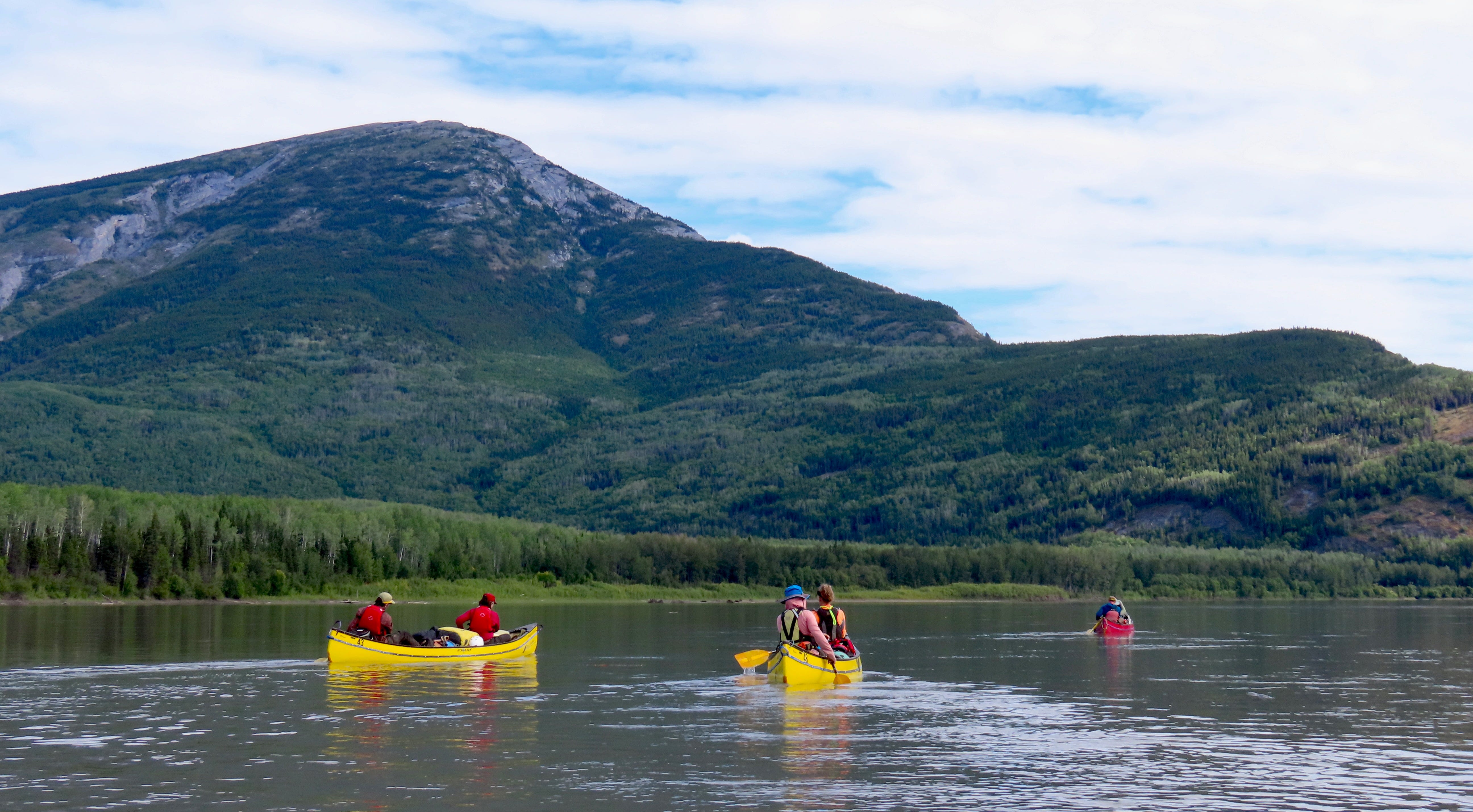
Once the Nahanni dumps its load in the Splits, only a little gravel remains. The last good campsite on the Nahanni sits about twenty kilometres above the takeout point, where the river slows down and enters its slow, snakelike final loops. Here at Last Chance Gravel Bar, we found a welcome surprise: people. Two self-guided groups, one from British Columbia, the other from Wakefield, Quebec, were already camped on the gravel bar. After several days alone in the canyons, we had neighbours.
Neighbours means river gossip. While we lounged at the Falls, watching it rain for an entire day, our new neighbours had been in the canyons. The river, they said, rose between four and eight feet overnight (depending on who you asked). The BC group lost a paddle and a PFD. One of the Wakefield group’s tents became an island amid the rising water. In the morning, they said, entire trees were rushing down the river and through the Gate, where we’d seen only fast but clean water. Bookshelf Falls, cold and clear when we arrived, was spewing mud and gravel.
But any woe came with a wink and a laugh. Their hands waved and their smiles widened as they told the tale. There was a strange yet familiar glee in their eyes. It was the glee of a good story. Sunshine in a storm.
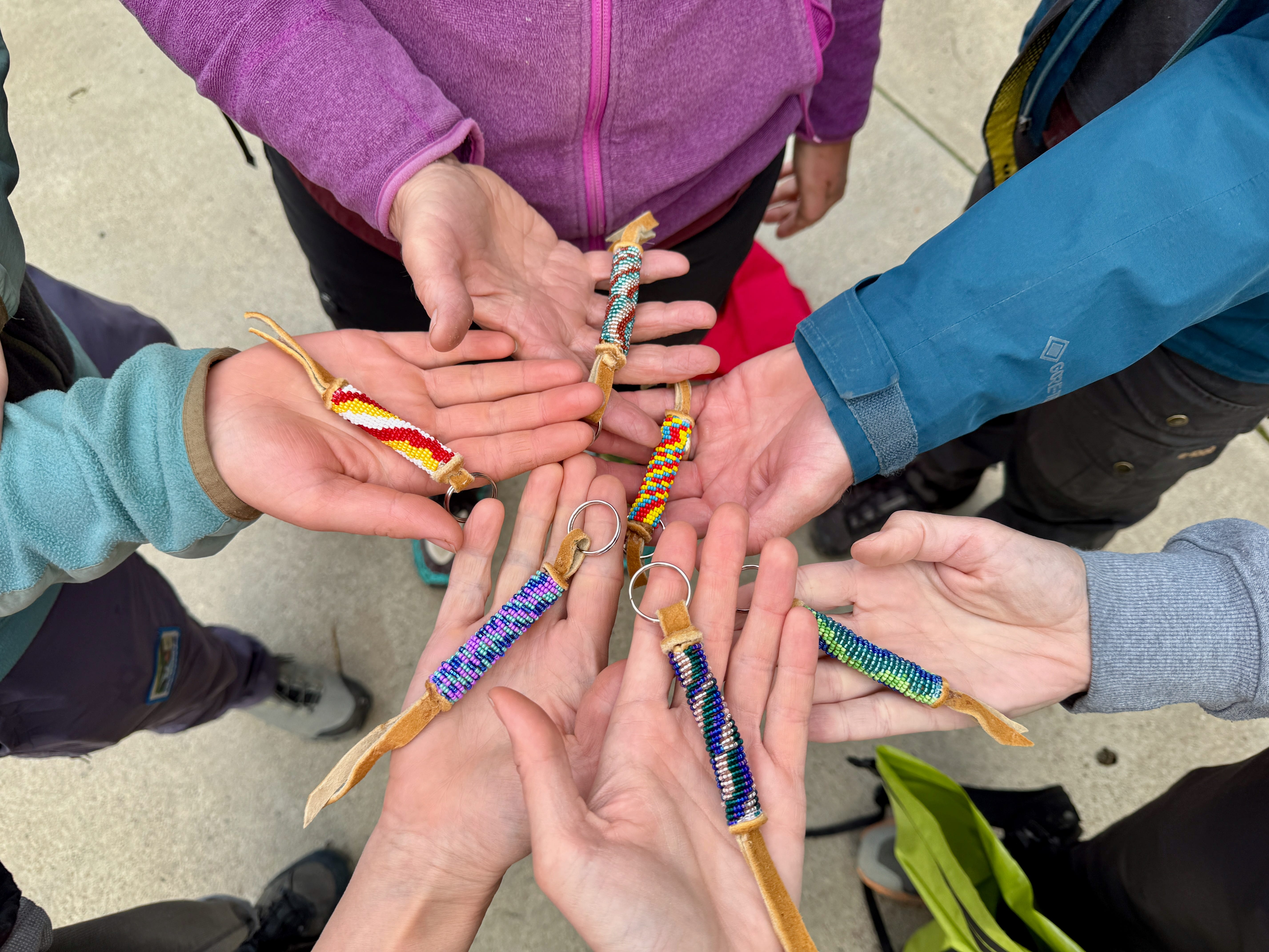
Through this conversation, I thought of the beaded moosehide keychain I wore as a zipper pull on my vest. The blue and green seed beads sparkled, and the moosehide still smelled faintly of tanning smoke.
At the trip’s start, rain and clouds had delayed our float plane flight by three days, stranding us in the small gateway town of Fort Simpson. On our third night in Simpson, just when the weather seemed hopeless, we attended a beading workshop. While local ladies stitched moccasin uppers, Tonya, a young Dene woman, taught our group to make these little tubes. The morning after the workshop, our flight took off. From then on, we always seemed to avoid the worst weather. We hit the Cirque in sunshine. We had shelter when it rained. We dodged the floods in the canyons. Call it a Nahanni good-luck charm.
Though exhaustion pressed upon me like a heavy pack on my shoulders, I couldn’t turn in right after dinner. The sound of a strumming guitar drifted down the gravel bar from the Wakefield crew’s kitchen. We drifted over with our chairs and snacks. The BC crew brought their last drops of alcohol. And we sang. Folk. Country. Rock. Some I knew; many I didn’t. We turned that campsite into Last Chance Party Bar.
With the midnight sun glowing above the trees and no neighbours to bother, the concert could have gone on forever. But all things must end. They packed up the guitar. We said our goodbyes. And we retreated to our tents for one last night.
The cost of adventure
There’s freedom on the river. Even now, with national park rules and topo maps and the rigid schedule of a guided trip, there’s freedom. But that freedom is hard. A Nahanni trip isn’t most people’s idea of a vacation. I lifted and hauled, paddled and portaged, cooked and cleaned. I slept on rocks, went without showers, and peed in the woods. Every little task is longer and harder in the wilderness, from getting water to going to bed at night. Every step is more dangerous than it is at home. You’re at the mercy of the weather. Your schedule will survive only as long as a paper airplane tossed over the Falls.
And I paid that cost—a fraction of what the old explorers paid—for a glimpse of what once was across this great continent.
Without all those impersonal mediators of modern life, you rely more on yourself, but also on those around you. Your team. You and your team gather firewood. Fetch water. Set up the kitchen shelter. Haul the boats up from the riverbank. When your boat swamps, your team is your only rescue. And, when you sing around the campfire, they’re both your audience and your choir.
On our last day, we paddled the long, slow loops to the Nahanni’s confluence with the Liard. Shortly before the village came into view, we spotted something huge and brown moving across the river. The enormous beast clambered onto shore as we approached, water dripping from its hide: a wood bison. He frowned at us, giving a long stare as we drifted by, then lumbered into the forest. Later, we saw a group of five bison cross the river while we waited for our pickup in the village of Nahanni Butte.
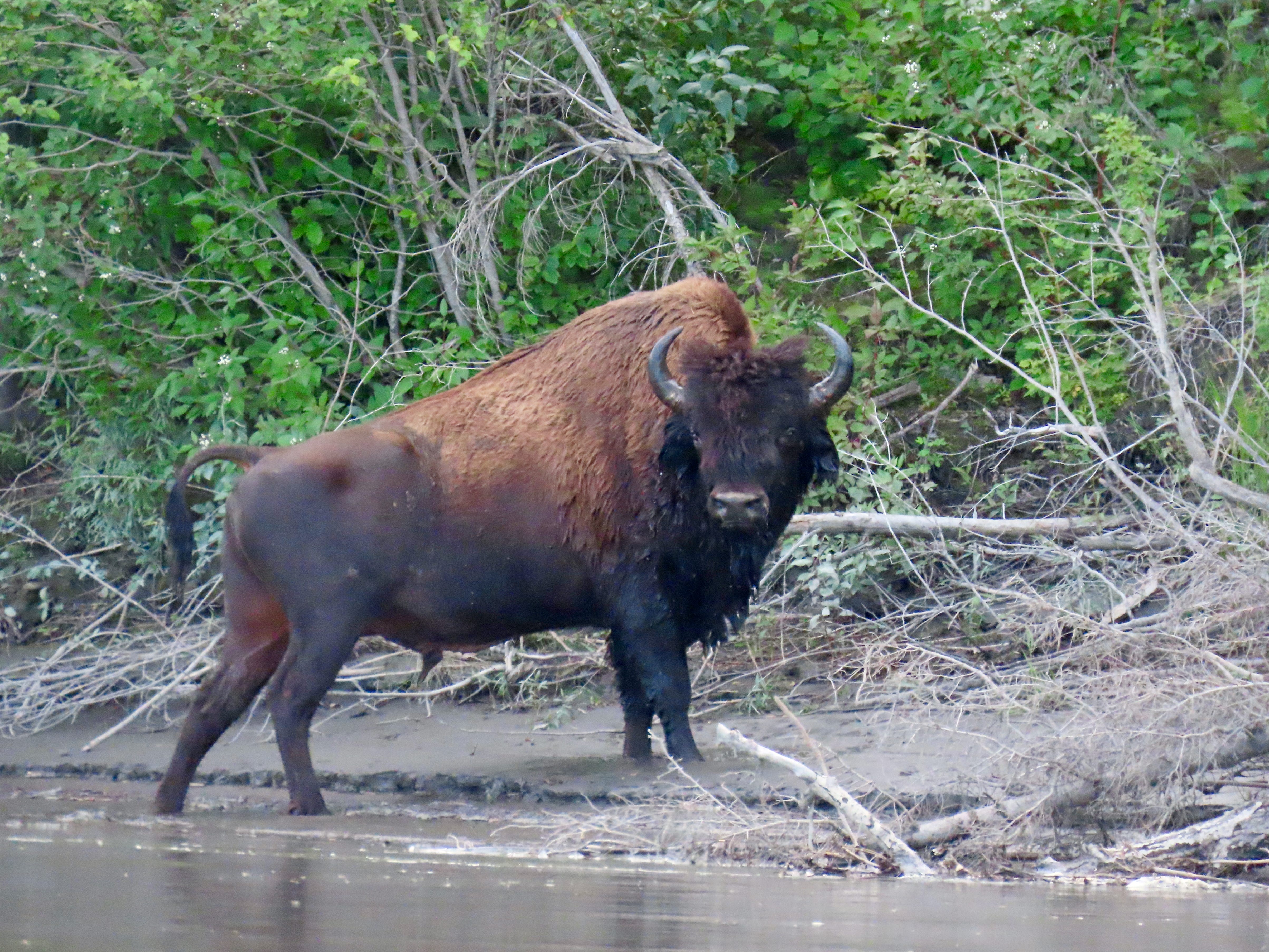
The Nahanni has changed since the days of old explorers. It’s more visited, but it’s also more protected. R.M. Patterson spent months on the river, believing it to be unspoiled country, but never mentions bison. Though native to the Nahanni area, by 1927, bison were nearly extinct from overhunting. In 1980, they were reintroduced, along with hunting restrictions. Now, bison are so common in the Nahanni lowlands that signs on the nearby Liard Highway warn drivers of the hazard.
It’s easy to romanticize the Wild West world of lawless freedom and endless resources, but it only existed for a moment, and only for those few who paid the cost. The power of modern technology, of the railroad and rifle, the automobile and the airplane, destroyed it. They shrank the world. And they allowed prospectors and settlers to run roughshod over the landscape and the people who lived there before them.
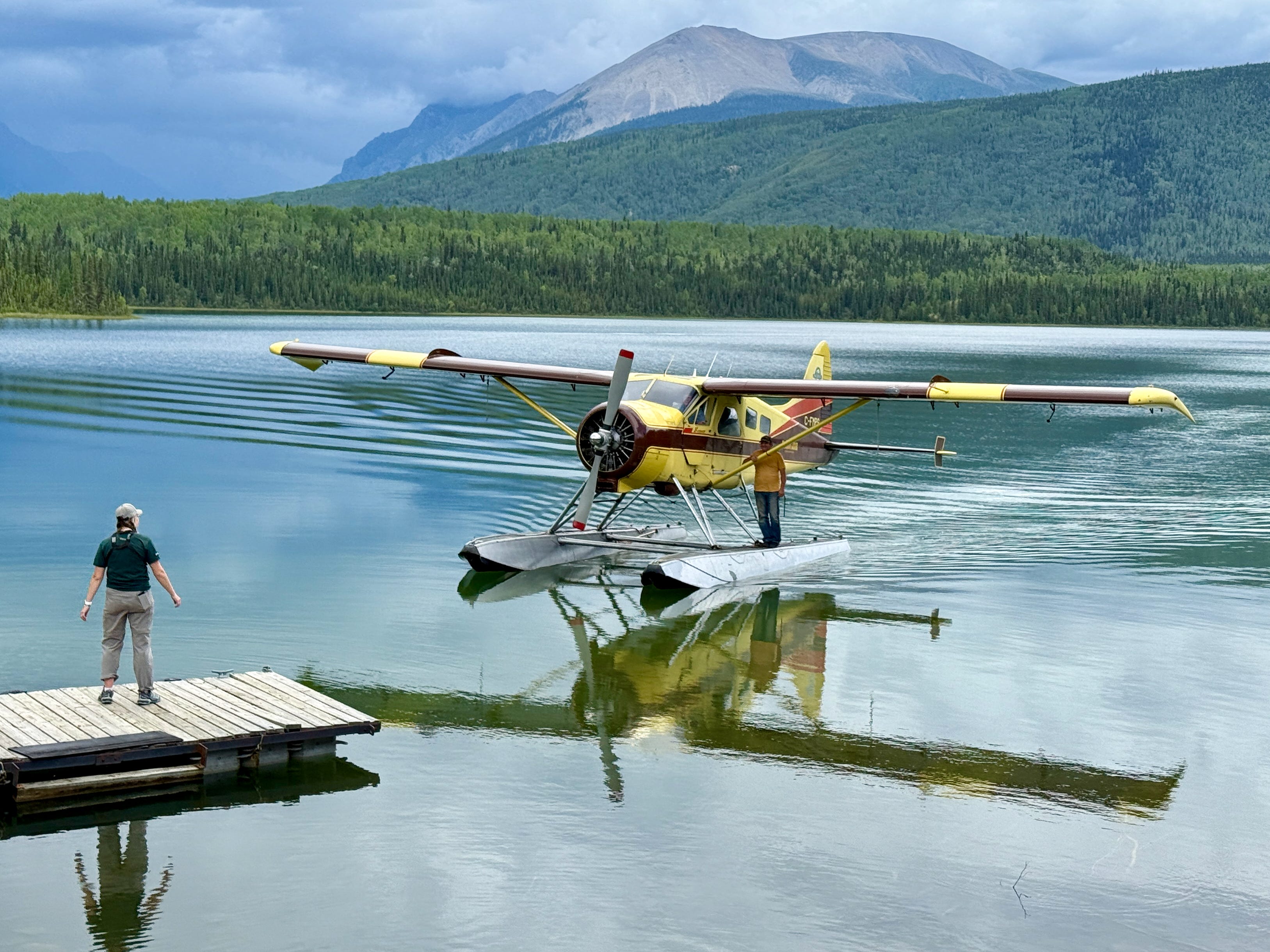
Few among us would give up modern comforts and the wealth they bring. But to see the Nahanni, you must give up a few comforts, for a little while. My Nahanni adventure was only possible because a prime minister once paddled the Nahanni and said, “we must preserve this”. The same restrictions that keep Nahanni wild, the same restrictions that make it hard—the lack of roads, the lack of facilities, the ban on motorboats—are also what keep people out. If Nahanni saw even one-tenth of Banff’s 4 million visitors per year, it would never be the same.
Few visit the Nahanni. And those who do visit don’t want it to be easy. “Everything was easy and beautiful” isn’t a good story. A good story needs hardship. Grit. Trials overcome and lessons learned and rewards earned instead of bought. The darkness of the storm makes the sunshine brighter.
We say we came to the Nahanni for the natural beauty. But we really came to find our story. Those other paddlers who survived the Nahanni flood got their story. And I got mine.
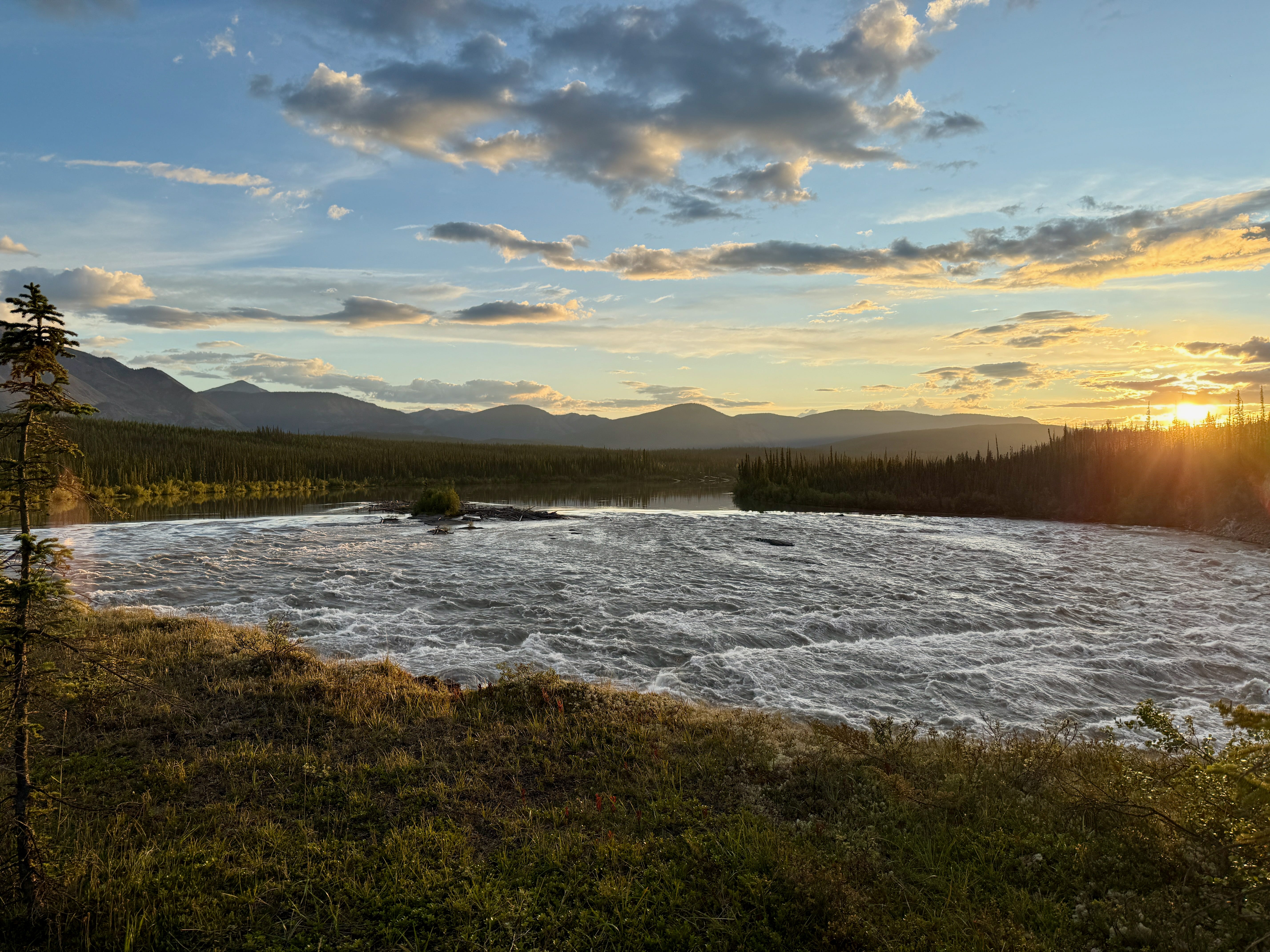
As we left Nahanni Butte, I stared down the river and wondered. If I only had the time and supplies, I could continue. The Nahanni flows into the Liard at Nahanni Butte. The Liard flows into the Mackenzie at Fort Simpson. And the Mackenzie, Canada’s longest river, flows past the Arctic Circle, past the treeline, until it empties into the ice-choked Beaufort Sea.
PS: What about the bears? Although we saw scat and diggings and even woke to find fresh bear tracks in our Second Canyon camp, we never saw a bear in the park. A group of eight makes enough of a racket to drive most bears away. But on the drive back to Fort Simpson, a black bear scampered across the highway ahead of our van. Even where the north has been developed, it’s still wild.
This is Part 3 of 3. Part 1 covered the start of the trip and the history of the Nahanni. Part 2 covered the middle of the trip, from the Cirque of the Unclimbables to the end of the canyons.
All photographs are mine unless another photographer is credited.